

Writing
Essays on consciousness, cosmology and the life that tests them
42 pieces, from the cockpit to the summit to the question of what is doing the looking.

Yoga FAQs
What is the aim/objective of yoga?The aim of yoga is a union of individual cognition centres with the universal cognition which is often referred to as 'Brahman' or the 'universal mind'.What is the aim/objective of the yoga you teach? - Individual and social impact?In addition to the above, the objective of yoga that I profess is to make people understand the nature of reality. The understanding will make them realign their life’s goals.What is the science behind yoga? Is there a model of realit
2026-03-24 · 5 min read

The Un-Hindu Marriage Act: Historical Origins, Christian Influence, and the Legislative Leverage
The enactment of the Hindu Marriage Act (HMA) on May 18, 1955, marked a paradigm shift in the governance of private life in India. It represented the transition from a pluralistic, custom-based, and religiously sanctioned legal order to a uniform, state-enforced statutory framework. The origins, architects, and ideological underpinnings of this legislation need to be analysed. The "alien" nature of the Act, or the theological divergence between traditional Hindu practices and the statutory impos
2026-02-06 · 27 min read

The Beautiful Philosophy of Vande Mantram
In the vast, interconnected web of the cosmos, we often find ourselves searching for the Divine in the distant stars or abstract equations. Yet, the most profound evidence of the universe’s nurturing nature is found much closer to us. To understand our place in the cosmic order, we must first recognise the role of our mother; she is our immediate creator.Before we can contemplate the "non-physical reality" of a Creator, we must acknowledge our immediate creator. Our mother is the bridge between
2026-01-13 · 5 min read

Happiness is just a Direction, not the Aim
The modern psyche is perpetually conditioned by two interlocking ideologies: the ephemeral decree of "YOLO—You Only Live Once" and the imperative that, to fulfil it, one must be perpetually happy. This contemporary dogma, however, stands 180 degrees opposite to reality.This relentless pursuit of elusive happiness is not accidental; it is an engine for continuous change, novelty, and consumerism. When pleasure is fleeting, the need to acquire the next fleeting sensation drives purchasing behaviou
2025-12-17 · 5 min read

Ideal Constitution of a Just State
There are more than a hundred countries, political parties and institutions that use the word 'Republic', yet none of them is truly a republic. Many countries call themselves democratic, yet none of them is truly democratic. Why? The questions are easy; answers need deep insights. This book portrays an ideal constitution of a modern nation-state.
2025-11-04 · 1 min read

A Fair Taxation System
We need to examine the concept of taxation, its historical evolution, principles of fairness, critique the current Indian system, and propose a new model.The word "taxation" comes from the Latin "taxatio," meaning "a rating, valuing, appraisal," which evolved to mean the imposition of taxes by a government. The Sanskrit word ‘Kara’ means hand, symbolising lending a hand towards maintaining a nation.New Taxation SystemLink: https://youtu.be/1G-A1SemDNs?si=robZzt8yTpIAyOUgIn ancient Egypt, Mesopot
2025-05-21 · 3 min read
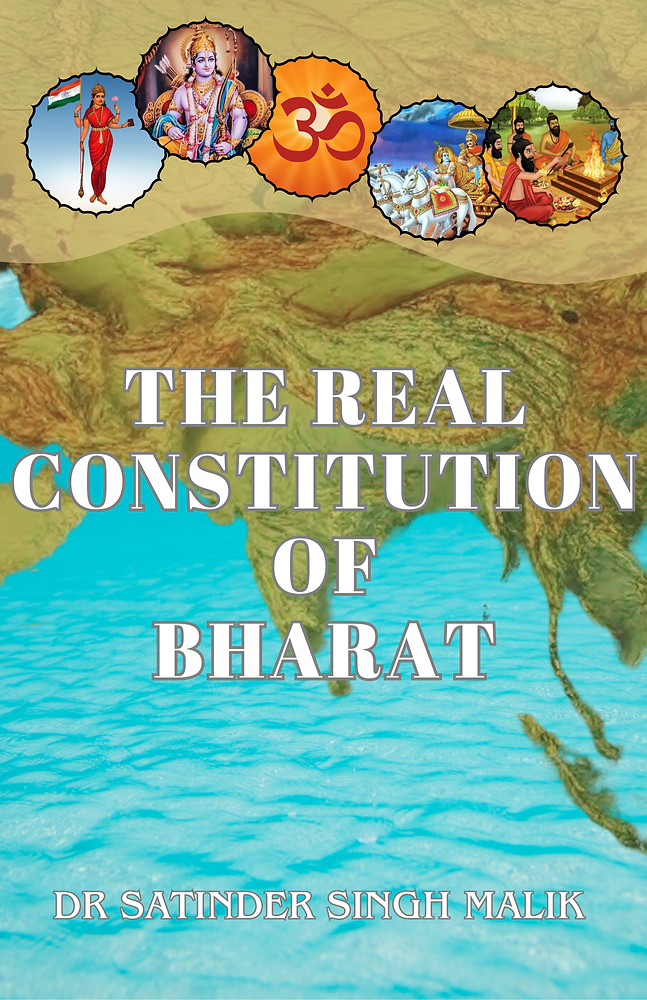
The Real Constitution of Bharat
On a cold winter morning in 2009, I stood with my fellow Air Force officers in a hollow square. We were told that the purpose of assembling is to solemnly swear an oath to protect the Constitution of India. We had joined the armed forces out of an unwavering love for our motherland, vowing to safeguard the nation with our lives. Yet, as the words of announcement echoed, a thought stirred within me that the Constitution is dynamic, a set of rules subject to change, but an oath should be timeless,
2025-05-05 · 3 min read

The Tree of Humans: Patriarchy and Other Family Systems
Introduction A method, order or control system in the human ecosystem forms a society. It also often appears to be a requirement for survival, success, development and growth. Family systems such as ‘Patriarchy’ and ‘Matriarchy’ have emerged throughout history as responses to a complex interplay of biological, cultural, economic, and social factors. These systems reflect the power dynamics within families and societies and how those dynamics shape roles, responsibilities, and identities. In many
2025-03-23 · 28 min read

Pursuit of Happiness
Happiness is a state of emotional well-being that a person experiences when pleasing or good things happen (Hedonic happiness) or as a positive evaluation of one's life and accomplishments (Eudaimonic happiness). It is a condition of subjective well-being. Happiness can be seen when one is free from negative emotions (such as sadness, fear, and anger) and also when positive emotions (such as affection, excitement, and interest) are present. Different cultures define happiness differently from th
2025-03-19 · 4 min read
The Purpose
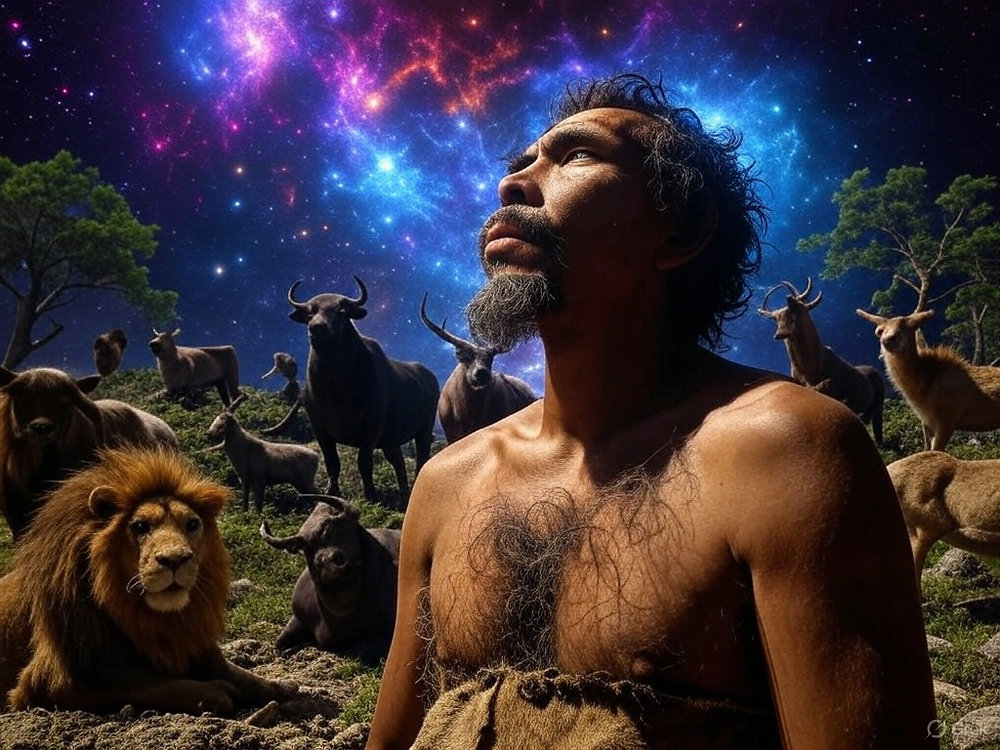
Different cultures and belief systems offer various interpretations of the purpose of human life. Some argue that the ultimate goal of life is to achieve a state of happiness or fulfillment, while others believe that the purpose of life is to fulfill a particular duty or responsibility, such as serving a deity or contributing to society. Some people see life as a journey of personal growth and self-discovery, while others view it as a temporary existence before an afterlife or reincarnation. Man
2025-03-19 · 5 min read

God or the Highest Good
Have you ever wondered who coined the word the word 'God', what is its root and how it is considered synonymous with the Supreme Reality? The Roman god of heaven (cosmos) is Deus Otiosus, who has, after completing the creation, withdrawn into heaven. The concept of the "idle god" refers to a deity whose existence is not readily knowable by humans solely through contemplation or the examination of divine actions. It is perceived that has left the government of the world to other gods, human ances
2025-03-19 · 7 min read

Karma
The Cosmos is dynamic, we get a sense of time only from the movement. It would be difficult to train the mind in imaginary environments and the lessons will also be fictitious. Therefore a real physical environment is created for the interpretative mind to interact with inanimate nature and animate creatures to experience and evolve. This evolution belongs to the mind and when the learning is complete and there is no desire left for any experience then it leads to a state called Nirvana or Moksh
2025-03-19 · 10 min read